PLAYERAS
with Rosario Toledo, Alba Haro and Javier Galiana
ESP (english below)
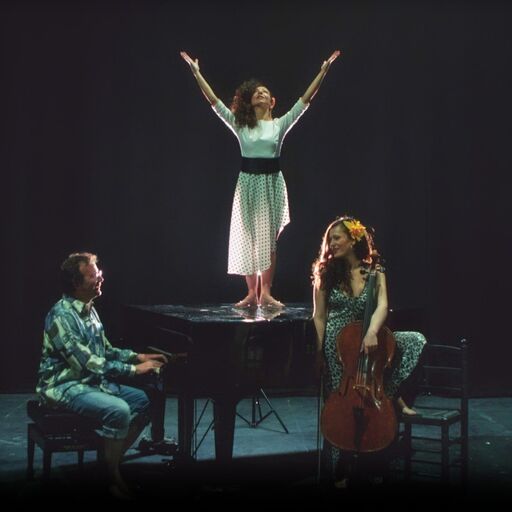
Con la forma de un trio de jazz, o de un cuarteto flamenco –ya se sabe que en Cádiz, los cuartetos son de tres o de cinco miembros- presentan Rosario Toledo –bailaora-, Alba Haro – violonchelo- y Javier Galiana –piano- estas Playeras.
Que salen así, de un disco increíble, grabado por los dos músicos bajo el estado de sitio de la pandemia del dichoso coronavirus y que quisieron dedicar, sí, a las playas, a las playas del mundo. Se canta lo que se pierde, y algo de esa perdida se cuela por las cuerdas del chelo y el piano, algo que ha hecho mover los inquietos pies de Rosario. ¡Ella veía las huellas de unos pies en la playa y no se daba cuenta de que eran sus propios pies! Playeras sale de ahí.
Los músicos, Javier y Alba le proponen a Rosario venir a bailar estas músicas y Rosario va y se mete en el agua. De todos es conocido el carácter musical que tienen los pies de Rosario, sus zapateados son frases musicales y cómo tales están aquí. ¿Acaso Alba y Javier no ponen también el cuerpo cuando tocan, es decir, no bailan también?. Pues eso, que se trata de entender el fraseo, la profundidad de los ritmos, el vaivén del mar.
Me atrevería a decir que este es un proyecto casi político, quiero decir, que este aferrarse al mar, a la playa, donde los ríos van a morir, tiene algo de reivindicación de la vida por encima de todas las cosas. Hay una profunda melancolía en estas estampas, estas flâneries, como dice Galiana, paseos interminables por la playa.
Pero lo que se quiere es vivir, nada aquí está teñido de negro, hasta las pozas más oscuras están vistas con el cegador sol al borde del mar. Y es un trio de vanguardia. No sólo porque se citen Ornette Coleman con el Manolo Sanlucar de la escala dórica, es que estos tres se han puesto en primera línea de playa, con los pies al borde del mar.
Ya saben que las playeras son un género musical en disputa. Por un lado, son cantes de playa, muy populares en Cádiz y Málaga a mediados del siglo XIX, entre habaneras marineras y pregones de vender pescaito. Pero las playeras son también los lamentos de plañideras hechos son, es decir, seguiriyas, como las que Elías Reclus describió en Cádiz en 1868, al borde del mar y de la revolución, cien años antes que el famoso mayo francés. Ser capaz de tocar con los dedos esos dos lados, los de la vida y los de la muerte, como dijo César Vallejo, eso es ser vanguardia.
En realidad no hay nada más revolucionario que la alegría de vivir. Me contaron que estabas enamorada de otro y entonces me fui a mi cuarto y escribí ese artículo contra el Gobierno por el que estoy preso, escribió zumbón Ernesto Cardenal. Nada tan potente como la melancolía que entierra en las propias entrañas todo lo que uno puede hacer como si ya lo hubiera hecho. Esa nostalgia de la utopía, arqueología del futuro, está en cada uno de estos paseos por las playas de Cádiz y de Brasil, del norte y del sur, del mundo.
Si quieren entender bien, profundamente, el adagio parisién que abre estas líneas, si quieren descubrir la arena bajo el asfalto, vean, escuchen estas Playeras. Vivir merece la pena sólo por dejarse mecer por maravillas como esta.
ENG
In the form of a jazz trio or a flamenco quartet—as we know, in Cádiz, quartets consist of three or five members—Rosario Toledo (dancer), Alba Haro (cello), and Javier Galiana (piano) present these Playeras.
This is from an incredible album, recorded by the two musicians under the siege of the coronavirus pandemic, which they wanted to dedicate, yes, to the beaches, to the beaches of the world. They sing of what is lost, and something of that loss seeps through the strings of the cello and piano, something that has made Rosario's restless feet move. She saw the footprints on the beach and didn't realize they were her own feet! Playeras emerges from there.
The musicians, Javier and Alba, suggest Rosario come and dance to this music, and Rosario goes and gets into the water. Everyone knows the musical character of Rosario's feet; her zapateados are musical phrases, and they are here as such. Don't Alba and Javier also put their bodies into it when they play? That is, don't they also dance? Well, that's it, it's about understanding the phrasing, the depth of the rhythms, the swaying of the sea.
I would dare say this is an almost political project; I mean, this clinging to the sea, to the beach, where rivers go to die, has something of a vindication of life above all else. There's a profound melancholy in these images, these flâneries, as Galiana says, endless walks along the beach.
But what they want is to live; nothing here is tinged with black, even the darkest pools are seen by the blinding sun at the edge of the sea. And it's an avant-garde trio. Not only because they quote Ornette Coleman with Manolo Sanlucar's Dorian scale, but these three have placed themselves on the beachfront, with their feet at the edge of the sea.
You already know that playeras are a contested musical genre. On the one hand, they are beach songs, very popular in Cádiz and Málaga in the mid-19th century, between seaside habaneras and cries for fish for sale. But playeras are also the laments of mourners made real, that is, seguiriyas, like those Elías Reclus described in Cádiz in 1868, on the edge of the sea and the revolution, a hundred years before the famous French May. Being able to touch those two sides with your fingers, those of life and those of death, as César Vallejo said, that is being avant-garde.
In truth, there is nothing more revolutionary than the joy of living. They told me you were in love with someone else, and then I went to my room and wrote that article against the government for which I'm imprisoned, Ernesto Cardenal wrote jokingly. Nothing is as powerful as the melancholy that buries in one's guts everything one can do as if one had already done it. That nostalgia for utopia, the archaeology of the future, is in every one of these walks along the beaches of Cádiz and Brazil, of the north and the south, of the world.
If you want to fully, deeply understand the Parisian adage that opens these lines, if you want to discover the sand beneath the asphalt, see, listen to these Playeras. Living is worth living just to let yourself be lulled by wonders like this.
Playeras es un ejemplo de espectáculo en el que se aúnan, el spanish tinge de jelly roll y la playa bajo los adoquines de la revolución del 68.
La mujer bailando flamenco sobre adoquines para que afloren las playas bañadas por mares de las músicas todas, con la improvisación como parte formal de las composiciones; así, como siempre fue en el jazz, el cuerpo y las libertades musicales como propuesta de mundo.
CONTACT
Antonio J. Giménez - [email protected] - +34 644 52 44 34
THE ONE STEP BEYOND
management, booking & productions
www.theosbmusic.com